A Sufi monastery built into a cliff at the Buna karst spring — Europe's most powerful.
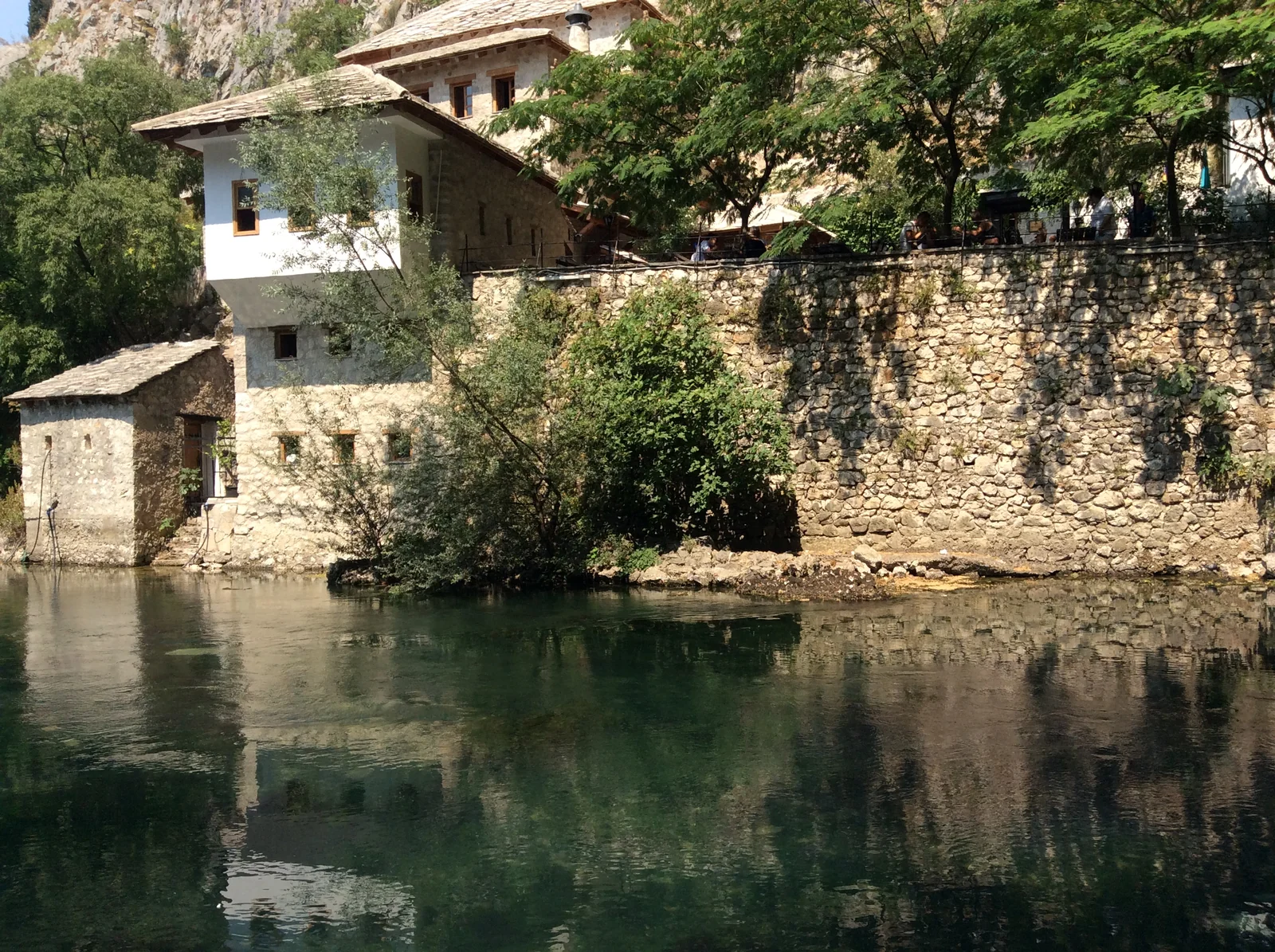
Blagaj Tekija is a 16th-century Sufi dervish monastery (tekija) built directly against a 200-metre limestone cliff, at the emergence point of the Buna river's karst spring. It sits 12 km southeast of Mostar in the village of Blagaj. The combination of the cliff, the tekija's white-walled Ottoman architecture, and the emerald water pouring out of the cave at its base has made Blagaj one of the most photographed sites in Bosnia and Herzegovina.
History: the tekija was founded around 1520 by the Bektashi Sufi order, a mystical branch of Islam that had spread through the Ottoman Empire. The current building dates from the 19th century after an earlier fire. The tekija has been in continuous use — first by Bektashi dervishes, later by the Naqshbandi order, and today it still serves as a functional place of prayer as well as a public heritage site. It is one of the few surviving active Sufi tekijas in Europe.
The Buna spring (Vrelo Bune) immediately beneath the tekija is the region's most dramatic natural feature — one of the strongest karst springs in Europe by volume, discharging an average of 43 cubic metres of water per second. The water emerges from an underwater cave system that extends several kilometres inland through the Podveležje plateau. It is cold (around 10°C), intensely clear, and drinkable at the source. The Buna river flows for just 9 km before joining the Neretva near Mostar — one of the shortest rivers in the Balkans.
Visiting the tekija interior: the building is open daily to visitors. Entrance is around 10 KM (~€5) per adult — confirm on the day as prices are occasionally adjusted. You can enter the two main rooms — the guest reception and the small prayer hall. Shoes come off at the door; dress modestly. Rooms are preserved with original Ottoman furnishings — low benches, carpets, wooden ceilings. The cliff-facing window offers a close-up view of the spring and the cave mouth directly below.
Around the tekija: a handful of riverside restaurants specialise in fresh Buna river trout (pastrmka) — roughly €10–15 for a full grilled fish with sides. Boat rides to the cave mouth are available from a riverside booth — typically a 15–20 minute ride; pricing varies year to year, so check on the day. The cave interior is flooded so boats can enter only a short distance. Pomegranate juice and local Herzegovinian wine are widely sold along the approach path.
For travellers on our tours: the Mostar Full-Day tour includes a 30-minute stop at Blagaj (exterior viewing and photos), with optional interior entry at your own time/expense. The Sarajevo day tour stops for 30 minutes. The Mostar Private Driver tour can extend this to 60–90 minutes if you want to see the tekija interior, take the boat ride, and eat trout for lunch. Combine with a short Bunski Kanali stop 3 km up the road (Buna–Bunica confluence) for the full Blagaj-area itinerary.
Practical notes: the site is pedestrian-only for the final 200 metres; parking is in a lot at the village entrance. The path is flat, accessible, and open year-round. Opening hours roughly 8:30–20:30 in summer with reduced hours in the off-season (typically closing by around 17:00); hours can be affected by prayer times — check at the entrance. Crowds peak between 11:00 and 15:00 in July–August; early morning and late afternoon are quieter.
Blagaj Tekija is in Mostar. See our Mostar travel guide for more in the area.
from €50/person · 8-hour day · no booking fees
See tour & book →Five stops across Herzegovina in one day. Meet 09:45 at Food House Mostar, back by ~5:15 pm.
12 hours of Herzegovina highlights in one day. 08:00 pickup at Gazi Husrevbegova 75 or your hotel.