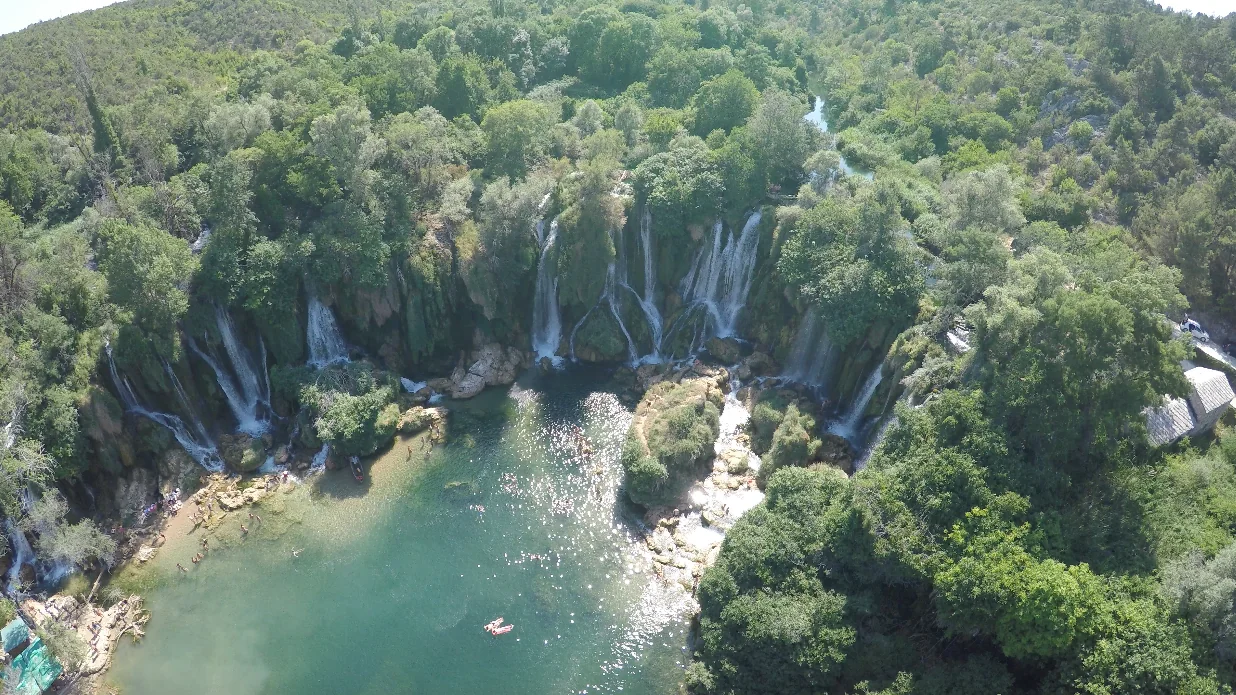
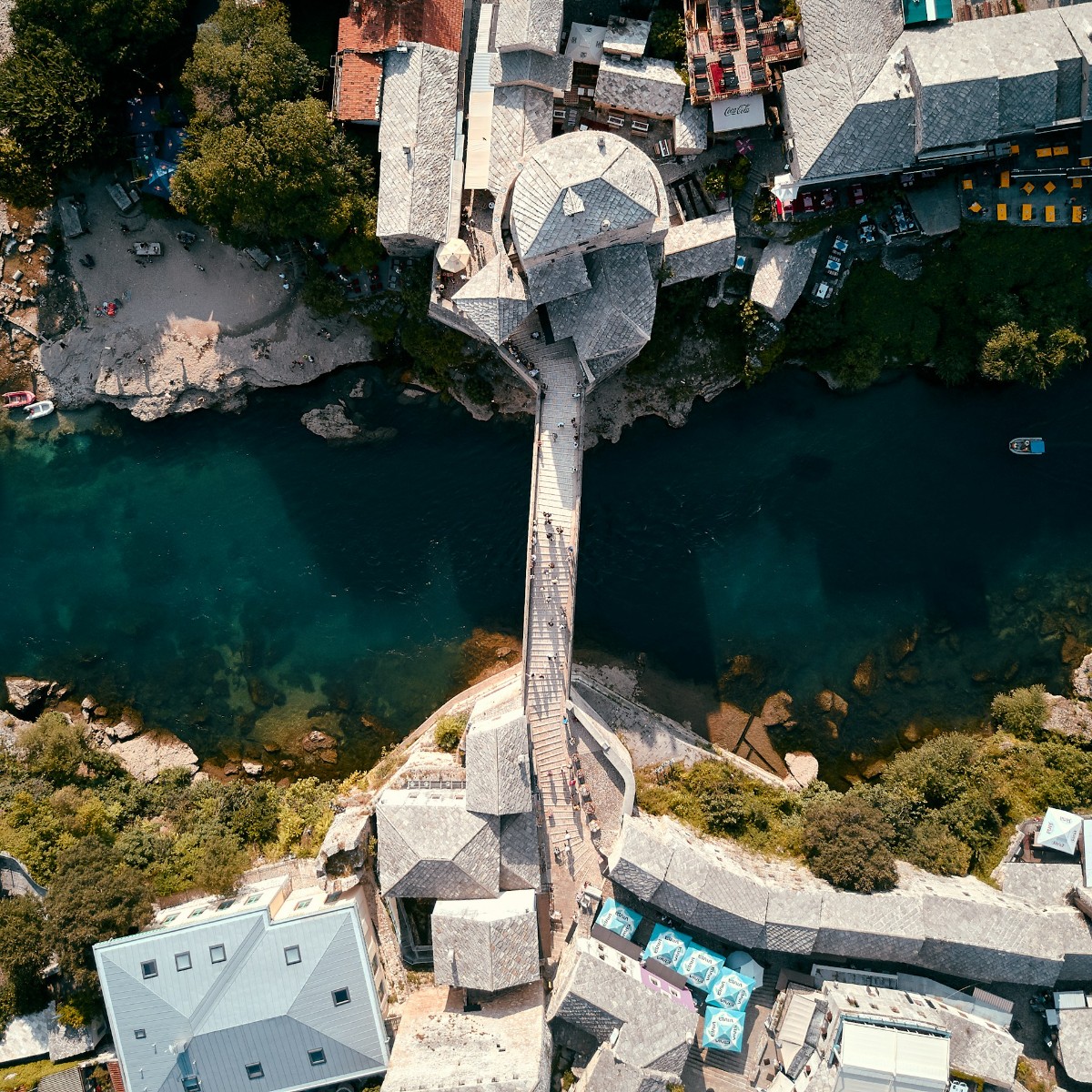
Mostar is the cultural capital of Herzegovina and the most visited city in Bosnia outside Sarajevo. It sits on the Neretva river in the southern valley, roughly halfway between Sarajevo and the Dalmatian coast. The city's core draw is Stari Most — the UNESCO-listed 16th-century Ottoman bridge — but Mostar also works as the natural base for day trips across the region, including the most popular one: Kravica Waterfall, 40 km south. If you are wondering what to do in Mostar, how long to stay, where to eat, where to sleep, and how the city connects to the rest of Herzegovina, this guide covers all of it.
Where is Mostar and how do you get there?
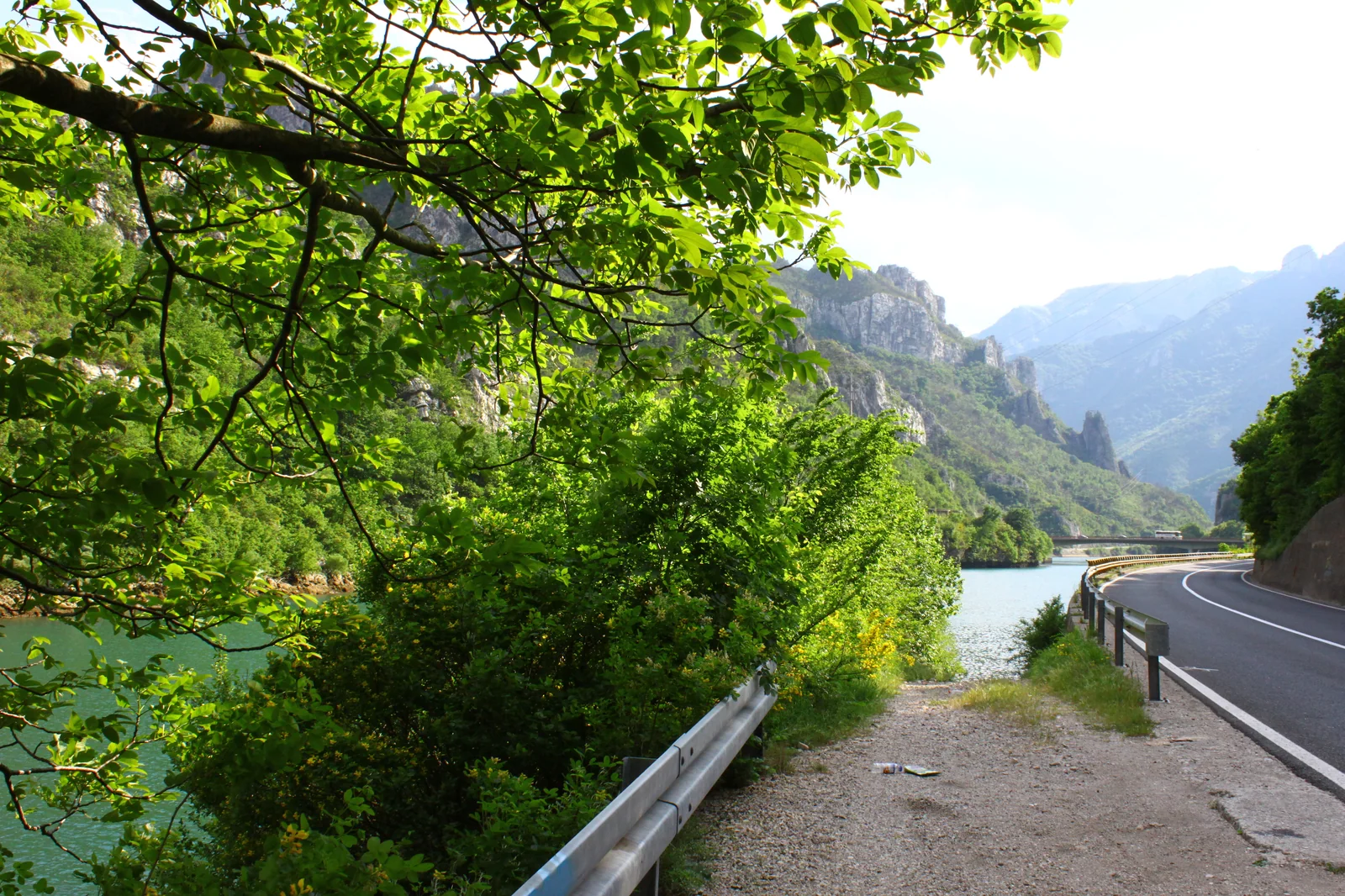
Mostar has a population of roughly 105,000 and sits on the M17 highway — the main north-south artery of Herzegovina. It is 140 km south of Sarajevo (3 hrs via the Neretva canyon), 135 km east of Dubrovnik (2.5 hrs via the Neum corridor and the Bosnian border), and 250 km from Split (4 hrs). A small international airport sits 6 km south of the city. The bus station is 300 m east of Stari Most; the train station (Sarajevo route only) adjoins it. Most travellers arrive by bus, rental car, or group tour — see our separate transport guides from Dubrovnik, Sarajevo, and Split.
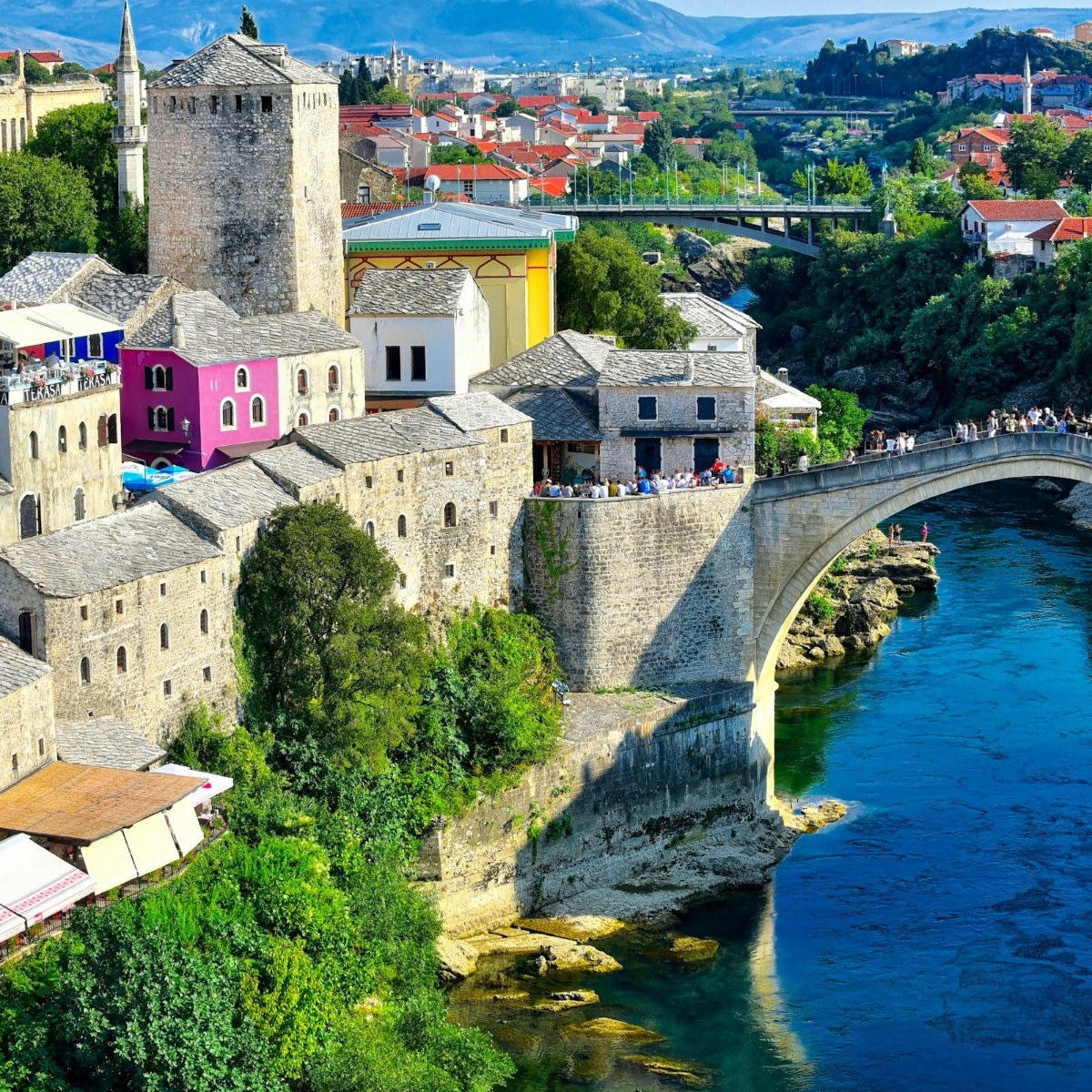
Stari Most and the Mostar old town.
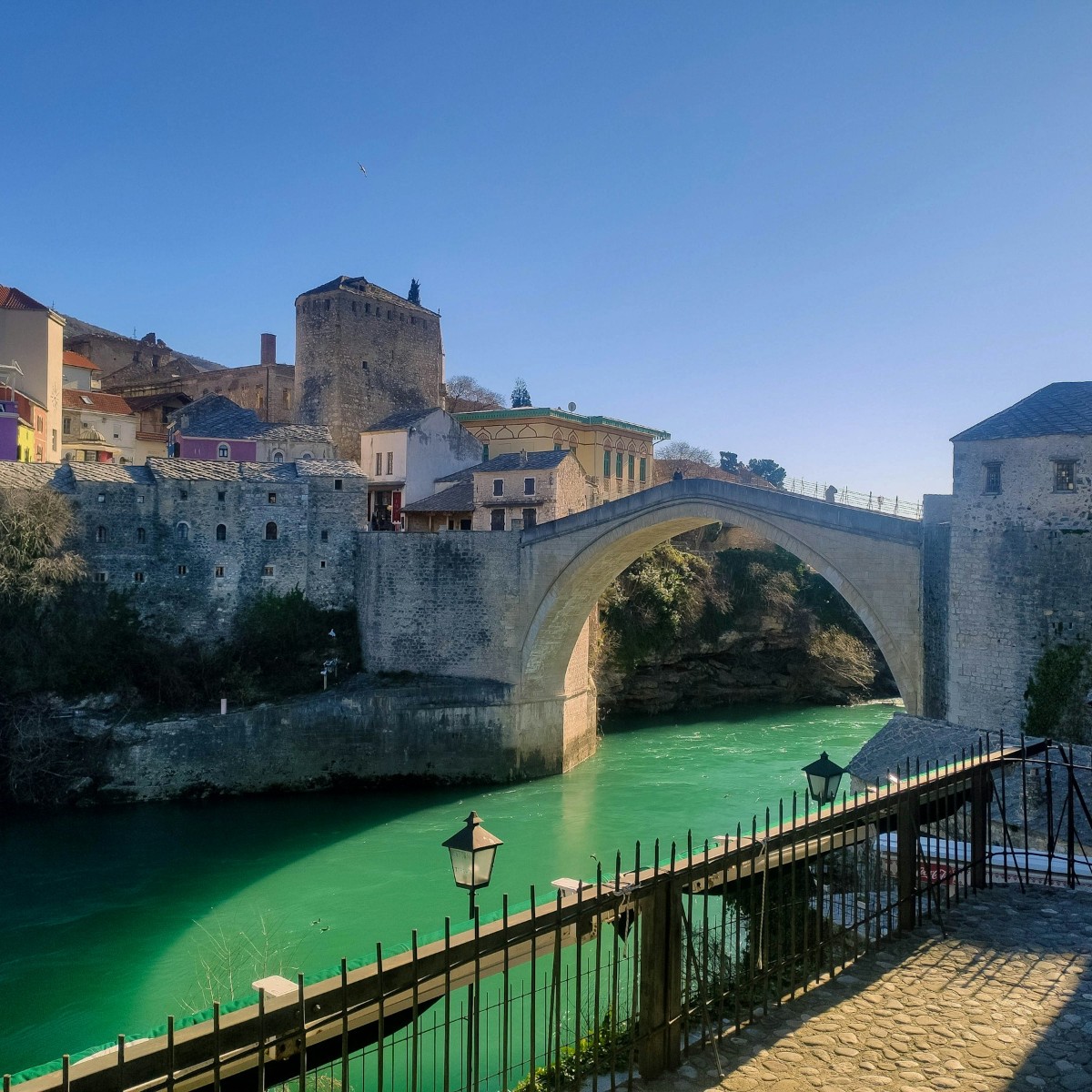
Stari Most is a 28-metre single-arch Ottoman stone bridge built by architect Mimar Hajrudin between 1557 and 1566, destroyed in 1993 during the Bosnian war, and rebuilt 2001–2004 using stones dredged from the Neretva. UNESCO inscribed the bridge and surrounding old town on the World Heritage list in 2005. The full entity page with visiting hours and historical background is at Stari Most.
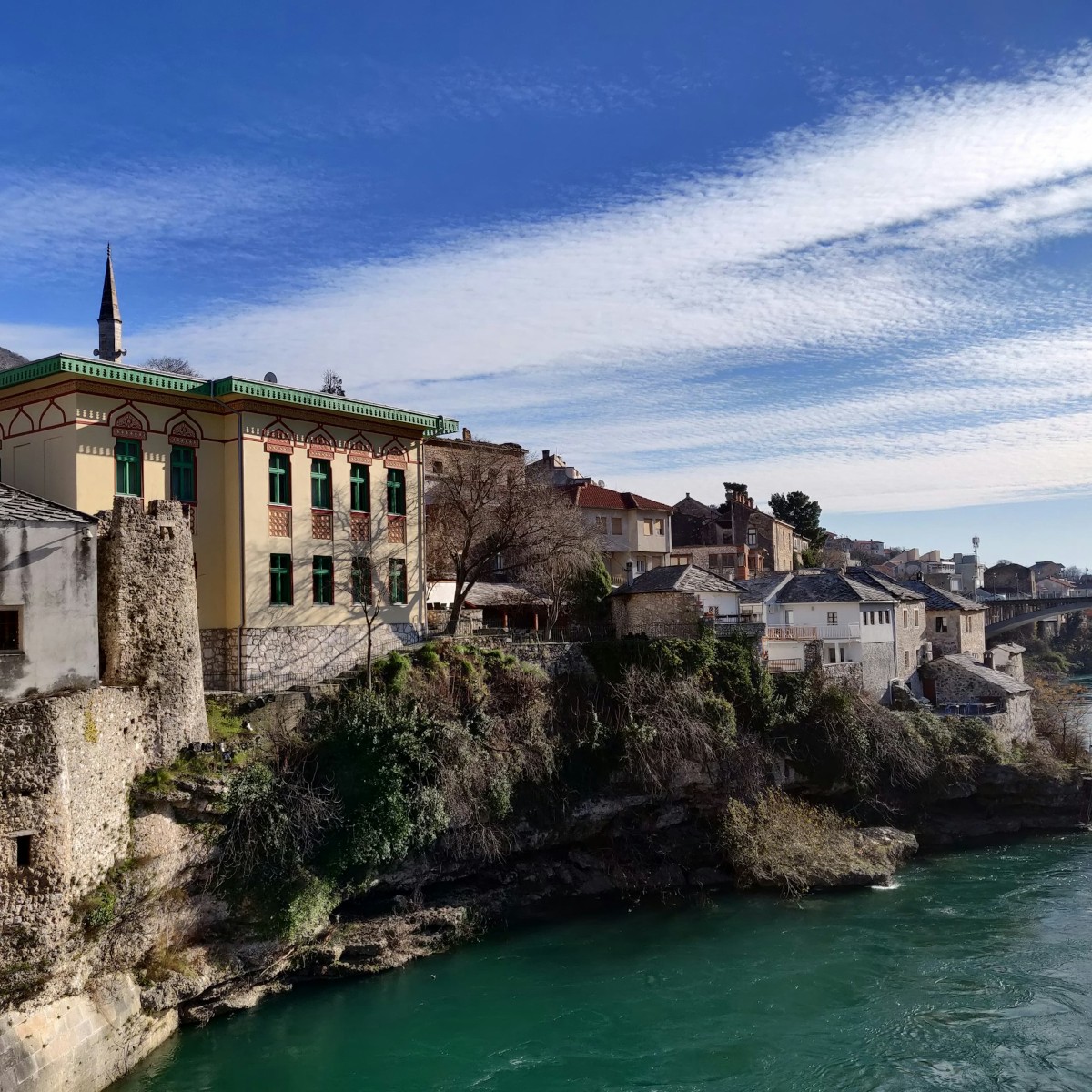
Around the bridge, the compact Mostar old town — called Kujundžiluk in Bosnian ("coppersmiths' quarter") — is a dense cluster of Ottoman stone houses, mosques, workshops, and cafés packed into about 400 metres of lanes on both sides of the river. The Koski Mehmed-paša Mosque (1617) offers a minaret climb with an arguably better bridge view than the bridge itself. The Crooked Bridge (Kriva Ćuprija) — a smaller 1558 Ottoman bridge 50 metres upstream — is often overlooked and worth the detour.
Bridge divers. On most summer afternoons, local divers jump 24 metres from Stari Most into the Neretva below — a tradition since the bridge was built. The Mostar Diving Club (Klub Skakača) has maintained it since 1968. Divers collect donations before jumping; €5–10 per person is customary. An annual international diving competition takes place every July.
What to do in Mostar beyond Stari Most.
Most visitors spend 1–2 days in Mostar and see the old town plus one hillside attraction. Beyond the bridge itself, the main things to do in Mostar are:
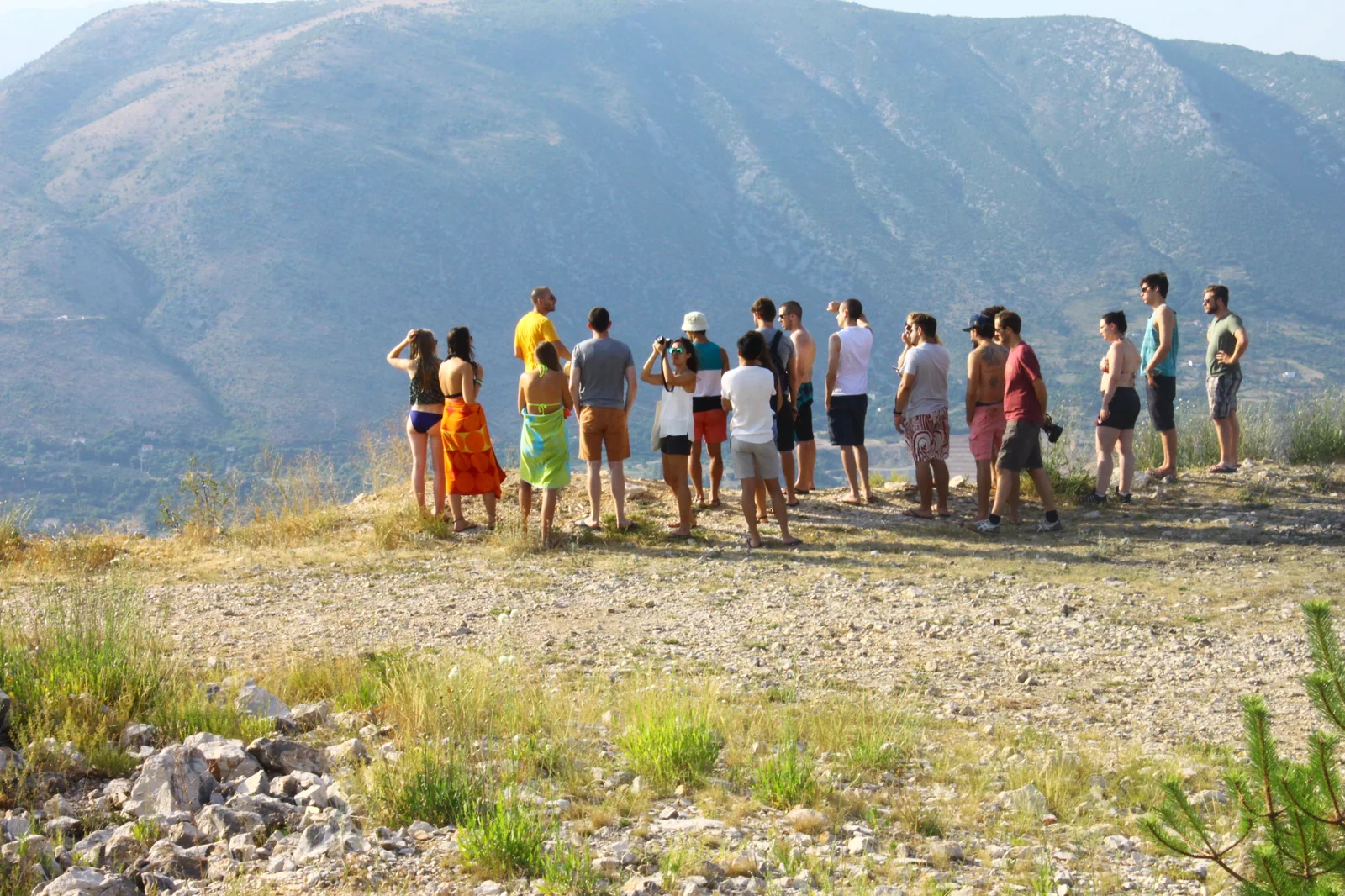
- Fortica Sky Walk — a cantilevered glass viewing platform opened in 2023 on the cliffs 350 metres above the west bank. The widest view of the old town, the bridge, and the Neretva valley. Free entry, open daylight hours, accessible by car or a 45-minute uphill walk.
- Muslibegović House — an 18th-century Ottoman residence turned museum and small hotel. One of the best-preserved examples of traditional Bosnian-Ottoman domestic architecture. Entry ~5 KM.
- Karađoz Beg Mosque (1557) — Mostar's largest classical-Ottoman mosque, with the city's tallest minaret. Visitors welcome outside prayer times, modest dress required.
- Bunski Kanali — 10 km southeast of central Mostar, where the Buna and Bunica rivers meet in a maze of turquoise channels. Local families drive here for weekend lunch; a 15–45 min stop on our Kravica tours. Restaurants serve fresh river trout (pastrmka).
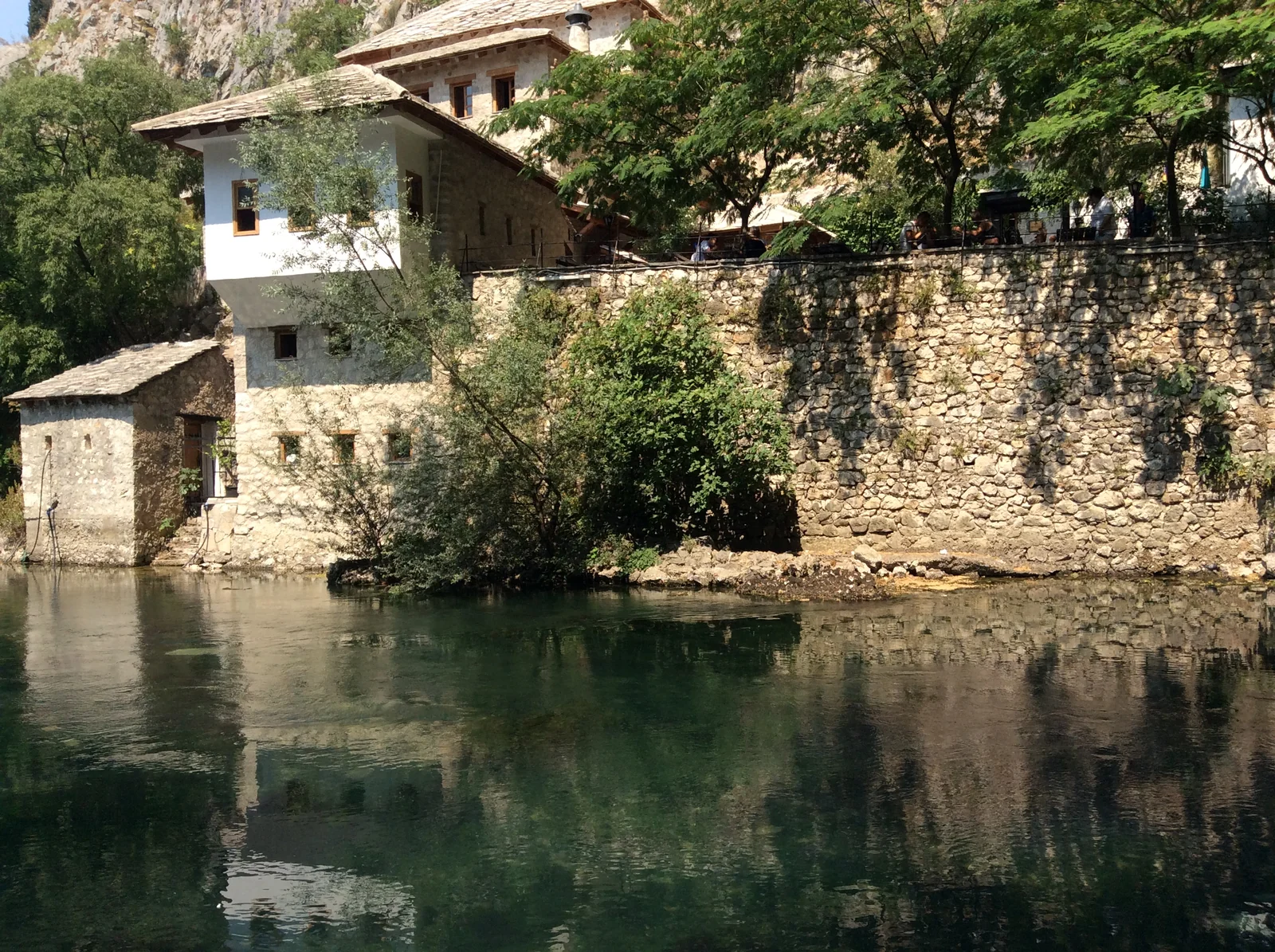
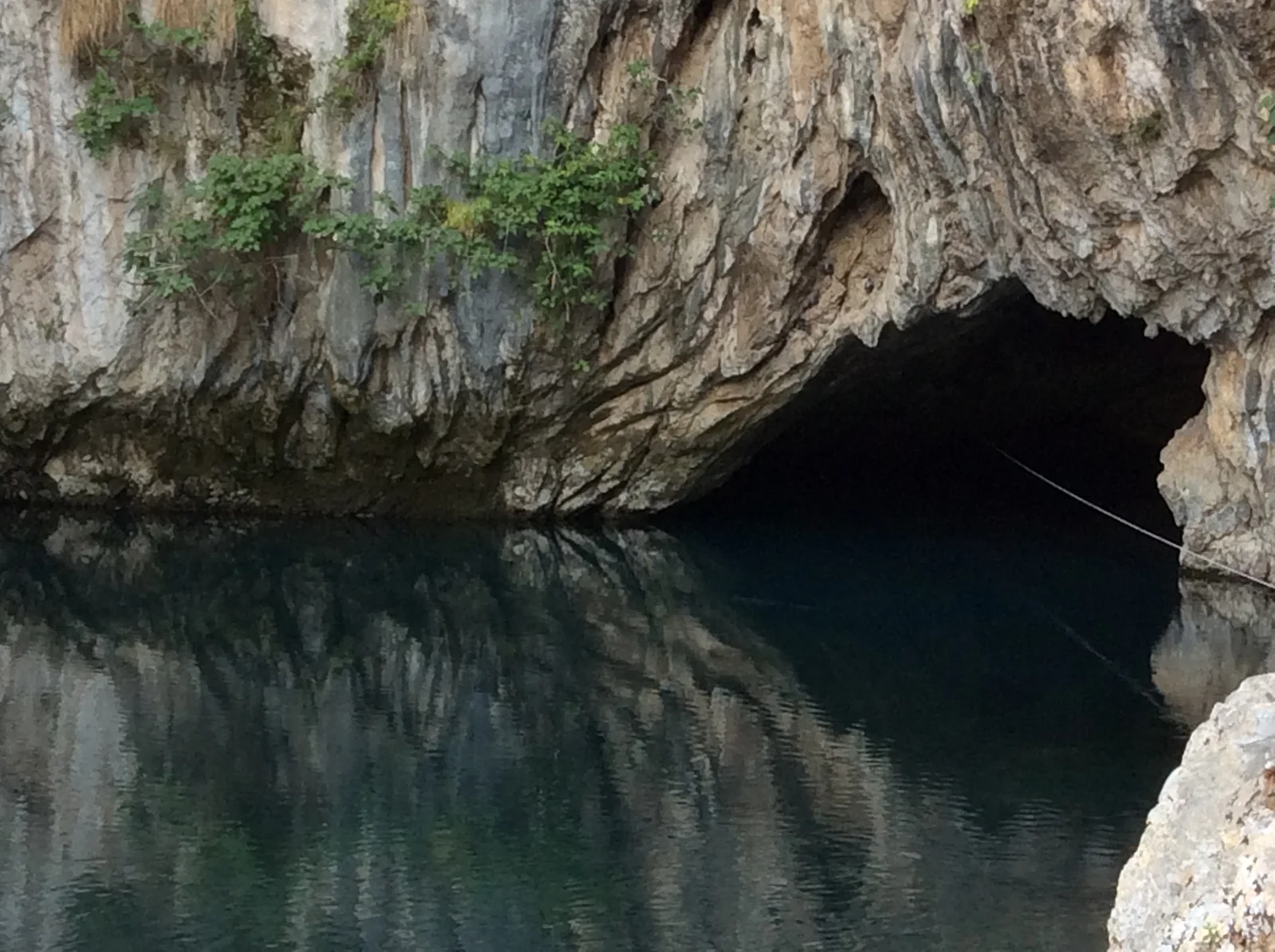
- Blagaj Tekija — a 16th-century Sufi dervish monastery built into a cliff at the Buna karst spring, 12 km southeast of Mostar. Europe's most powerful karst spring. See Blagaj Tekija day trip for visit logistics.
- The Neretva river itself, in the centre of town. Walking paths on both banks; swimming near the bridge is legal but cold year-round.
Day trips from Mostar.
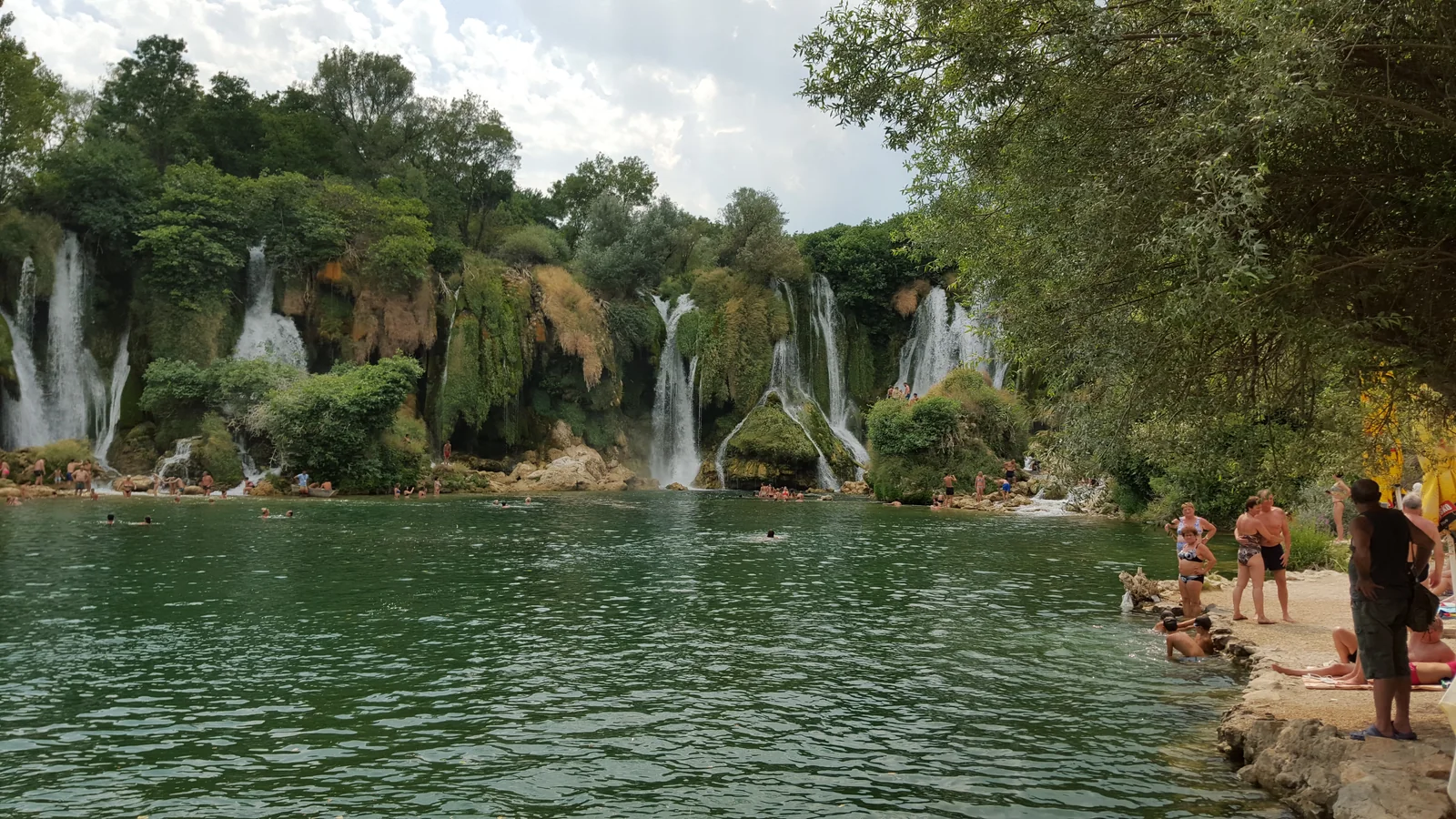
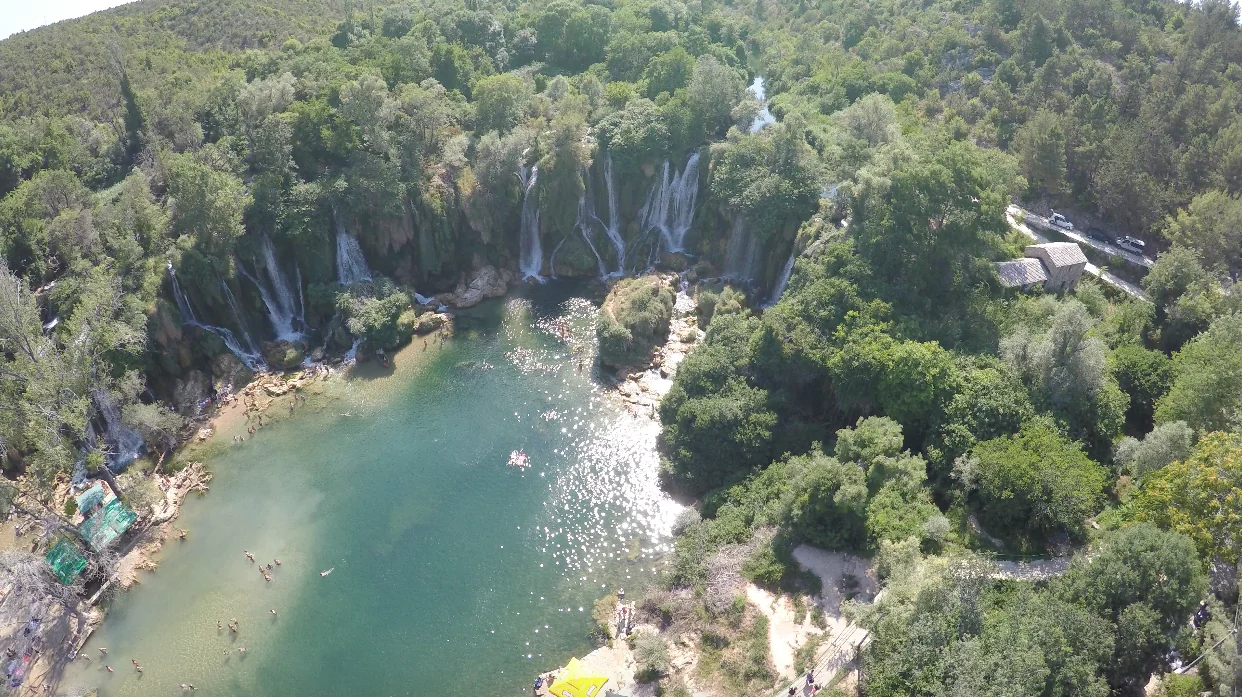
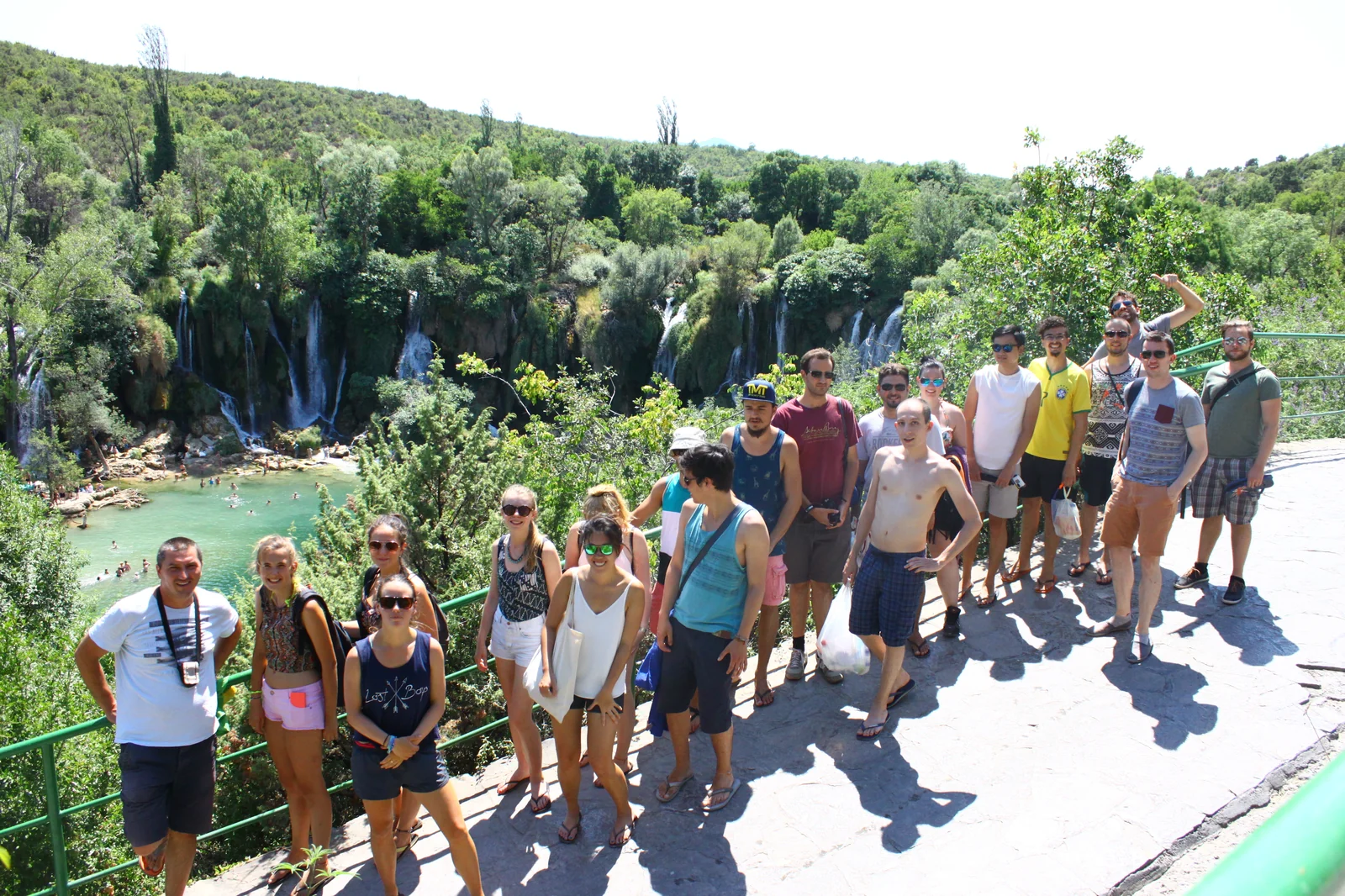
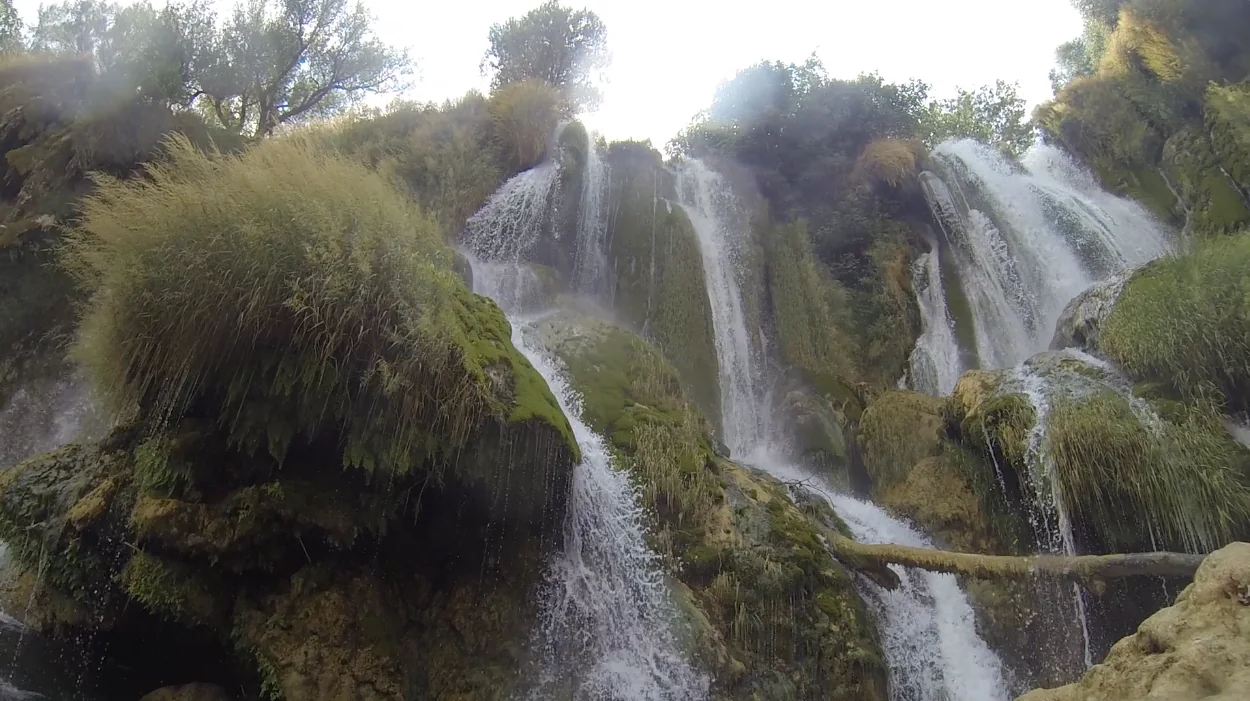
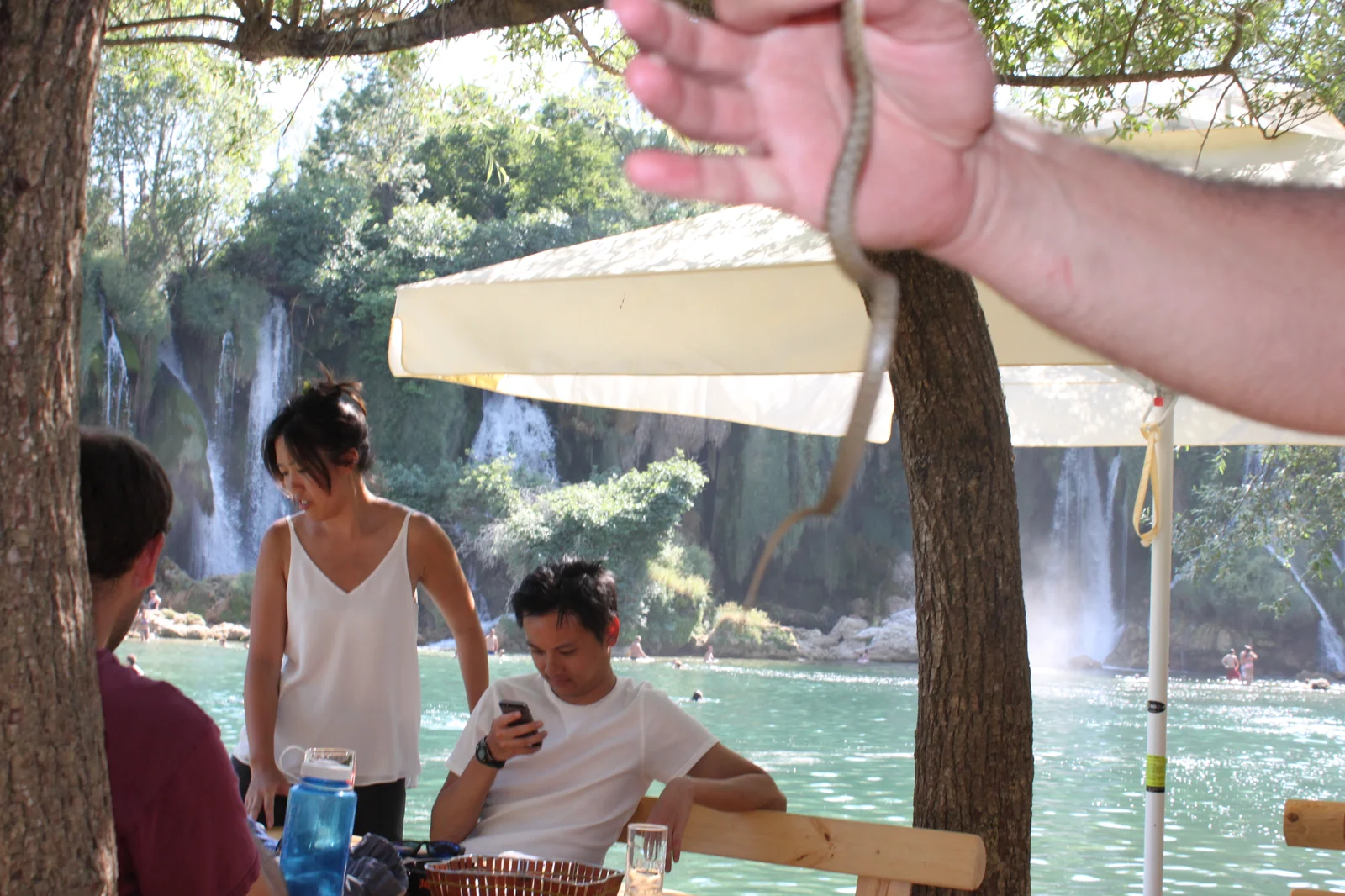
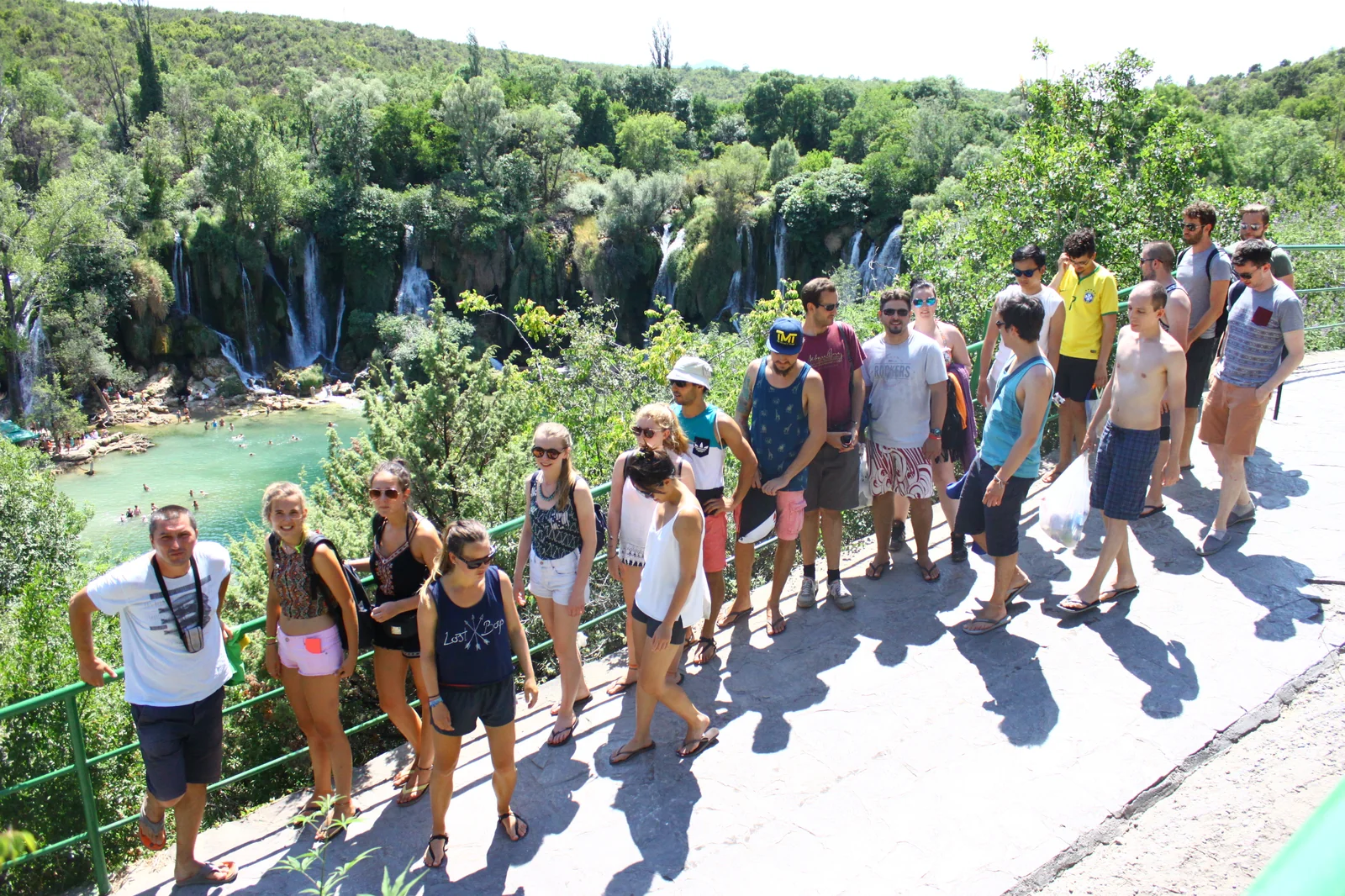
Mostar's real strength for travellers is its location — most of the region's top attractions sit within a 90-minute drive. The headline day trip is Kravica Waterfall, 40 km south. Our Kravica waterfall guide covers the full trip logistics. Shared half-day tours (€35) run daily at 09:45; full-day versions (€50) add Fortica, Blagaj, Počitelj, and Bunski Kanali to the same budget.
Other day-trip options from Mostar:
- Počitelj — walled Ottoman hilltop village 30 km south. 30-minute climb, included on most full-day tours. - Medjugorje — Catholic pilgrimage site 25 km southwest. Combined with Kravica on private driver tours. - Koćuša Waterfall — Kravica's quieter twin, 60 km south-west. - Konjic — Ottoman bridge town + Tito's Cold War nuclear bunker, 1 hr 15 min north. - Čapljina — gateway to Mogorjelo Roman villa and Hutovo Blato bird reserve. - Stolac and Radimlja Necropolis — UNESCO medieval stećci tombstones, 40 km east.
For a one-day Mostar city itinerary without day trips, see our hour-by-hour one day in Mostar itinerary.
Where to stay in Mostar.
Most hotels and guesthouses cluster within a 10-minute walk of Stari Most. The east bank (old-town core) is tourist-dense and louder until late; the west bank is quieter and more residential. A mid-range double room runs €50–90 in peak summer, €30–60 in shoulder months. Budget hostels from €15/bed. For a Kravica-focused trip, any old-town-walking-distance accommodation works — our morning pickup is at Food House Mostar, Rade Bitange 12, 200 m from the bridge.
Food and restaurants.
Traditional Herzegovinian cuisine is meat-heavy, wood-grilled, and straightforward. The signature dishes are *ćevapi* (grilled minced-meat fingers, usually 10 pieces with flatbread and raw onion — around 12–18 KM / €6–9), *burek* (phyllo pie with meat, cheese, or spinach — 3–5 KM / €1.50–2.50), pastrmka (grilled trout, 20–30 KM / €10–15), and *japrak* (grape-leaf dolma). For sweets, *hurmašice* (date-syrup semolina) and *tufahija* (stuffed apple in syrup). The Kujundžiluk restaurants along the lanes east of the bridge are tourist-priced; a few streets back (toward Ćejvan Ćehajina) the prices drop by 30–40% for the same food.
Local wine is produced in the Žilavka (white) and Blatina (red) varieties — both characteristic Herzegovinian grapes. Try Herzegovina Produkt, Čitluk, or Vukoje if you see them on menus. Coffee is Bosnian-style, served in a copper *džezva* with rahat-lokum on the side.
Best time to visit Mostar.
Herzegovina gets hot dry summers (July and August commonly 30–38°C) and mild wet winters. The shoulder months — May, June, September, early October — offer the best combination of stable weather and manageable crowds. July and August are peak tourism season; the old town is uncomfortably crowded between 11:00 and 16:00 in those months. Winter is quiet and atmospheric — fog on the Neretva, empty bridge, cafés mostly open — but several smaller museums close or reduce hours.
How long should you stay in Mostar?
One day is enough for the old town core: cross the bridge, climb Koski Mehmed-paša minaret, lunch in Kujundžiluk, watch the divers, stroll the west bank. Two days lets you add Fortica Sky Walk plus a Blagaj + Bunski Kanali half-day. Three days opens up Kravica Waterfall or Počitelj as a proper day trip. Most visitors stay 1–2 nights; Kravica-focused travellers commonly extend to 3.
Frequently asked questions.
What to do in Mostar for a day? Cross Stari Most both ways, climb the Koski Mehmed-paša minaret, wander Kujundžiluk, watch the bridge divers (summer afternoons), and take in the Crooked Bridge on your way out. Lunch in the old town, coffee on the west bank. See our one day in Mostar itinerary for the hour-by-hour version.
Is Mostar worth visiting? Yes — for the UNESCO bridge, the compact and well-preserved old town, and the day-trip base to Kravica and Herzegovina's other natural sites. Most travellers combine Mostar with either Sarajevo (north) or the Dalmatian coast (south).
How many days in Mostar? 1–2 nights for the city itself. Add 1–2 nights if you plan to day-trip to Kravica, Blagaj, Medjugorje, or Počitelj.
Is Mostar safe? Yes. Mostar is a normal European tourist city with low street crime. The war ended in 1995; physical damage on some buildings remains but does not affect visitor safety.
What currency does Mostar use? Bosnian convertible mark (BAM or KM). Euros are widely accepted in tourist venues, though change is usually given in KM. 1 EUR ≈ 1.96 KM (fixed peg). ATMs everywhere.
Do you need a visa for Bosnia? No visa for EU, UK, US, Canada, Australia, New Zealand, and most Asian/Latin American passports for stays up to 90 days. Passport required for the border crossing if arriving from Croatia (Dubrovnik/Split).
Can you see Mostar and Kravica in one day? Yes — our Mostar half-day tour does exactly this from a Mostar base. From Dubrovnik or Split the day is longer but still feasible; see Dubrovnik tour or Split tour.
Book a Mostar-based Kravica tour.
We run daily tours from Mostar: Half-day Kravica + Počitelj (€35/pax), Full-day Herzegovina (€50/pax — Fortica, Bunski Kanali, Blagaj, Počitelj, Kravica), and Private Driver (€200/vehicle, flexible itinerary). Pickup at Food House Mostar (Rade Bitange 12) at 09:45. See all Mostar tours.
Photos from this route
Ready to see Kravica?
Our From Mostar: Kravica, Blagaj, Počitelj, Bunski Kanali & Fortica Skywalk — Full-Day Tour runs daily — from €50/person, 8-hour day, no booking fees.
✓ Direct operator, no agency markup · ✓ Reply within 1 hour by email · ✓ Free cancellation 24 h before