Bosnia and Herzegovina has an unusually dense concentration of waterfalls for a small country — karst limestone geology, abundant rainfall in the central highlands, and a dozen rivers cutting through the Dinaric Alps all combine to produce more than 30 named waterfalls. Most are small, remote, or inaccessible without serious hiking. A handful are genuine destinations. This is an honest ranking of the eight that are actually worth planning a trip around.
Ranked by a weighted score across four criteria: scale (how impressive the cascade itself is), swimmability (whether you can enter the water), accessibility (how realistic it is to visit without special gear), and visitor experience (crowds, facilities, and surrounding context). The top spot isn't contested — Kravica wins on every metric except raw height.
1. Kravica Waterfall (Trebižat river, Ljubuški)
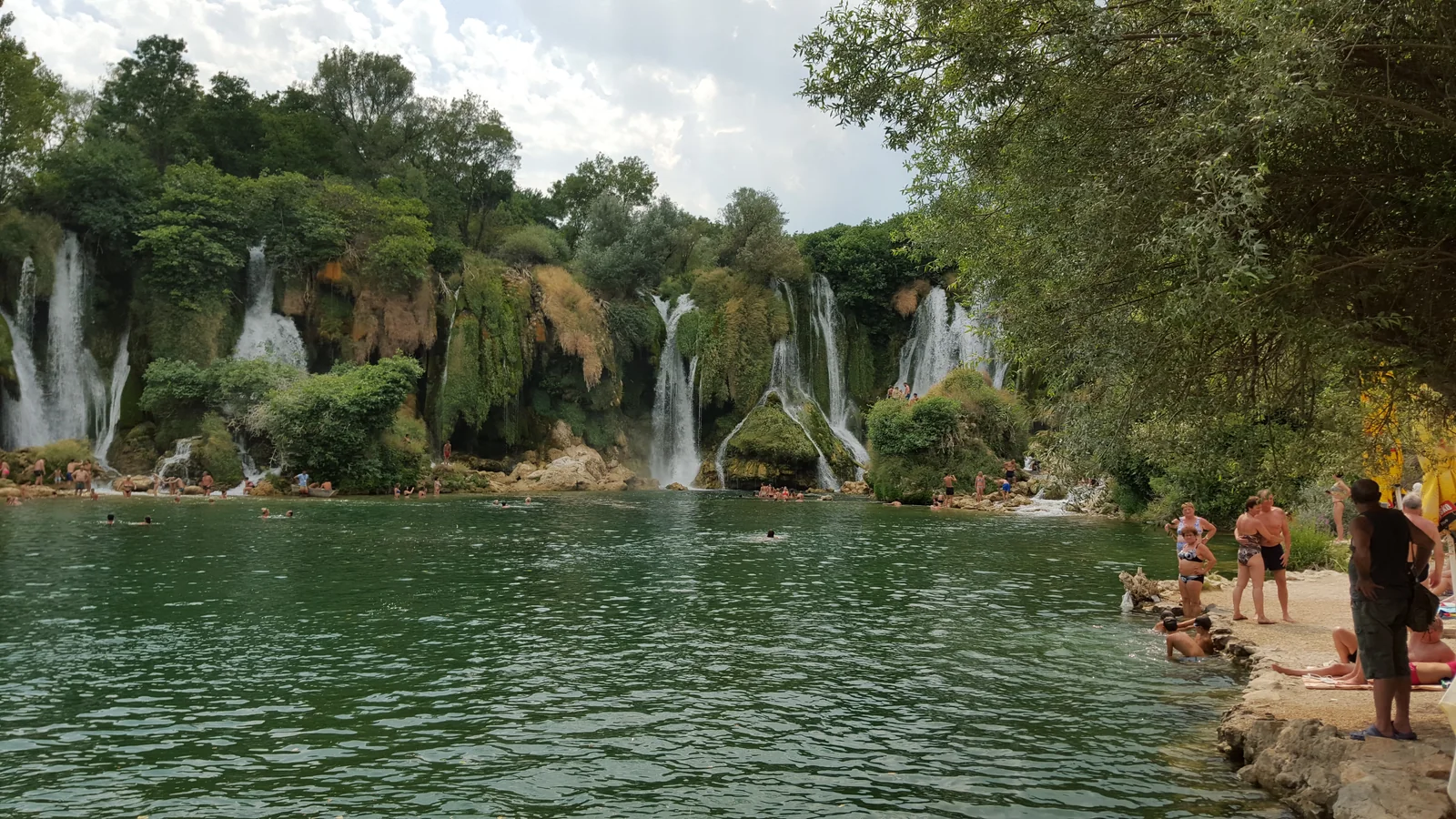
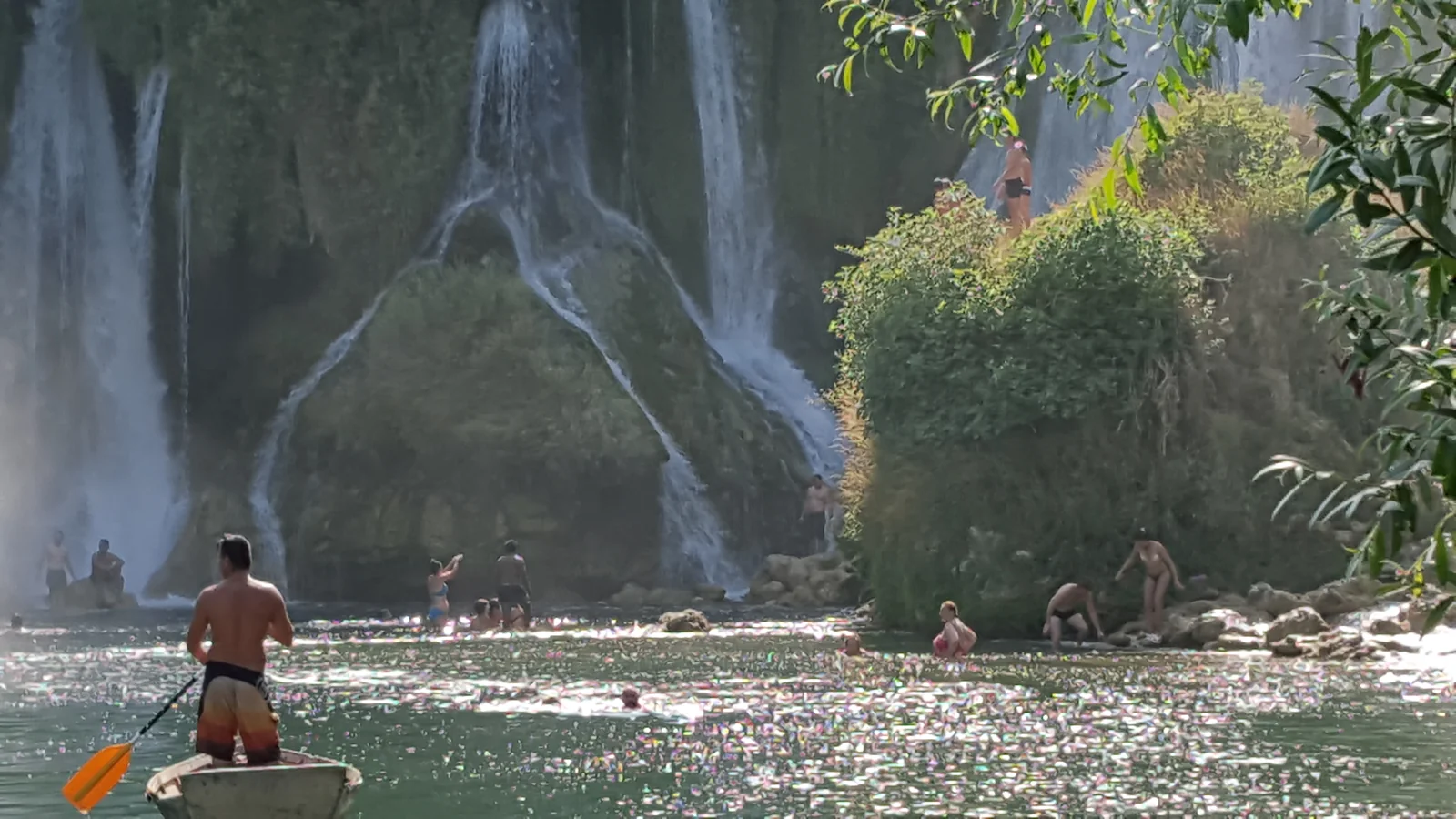
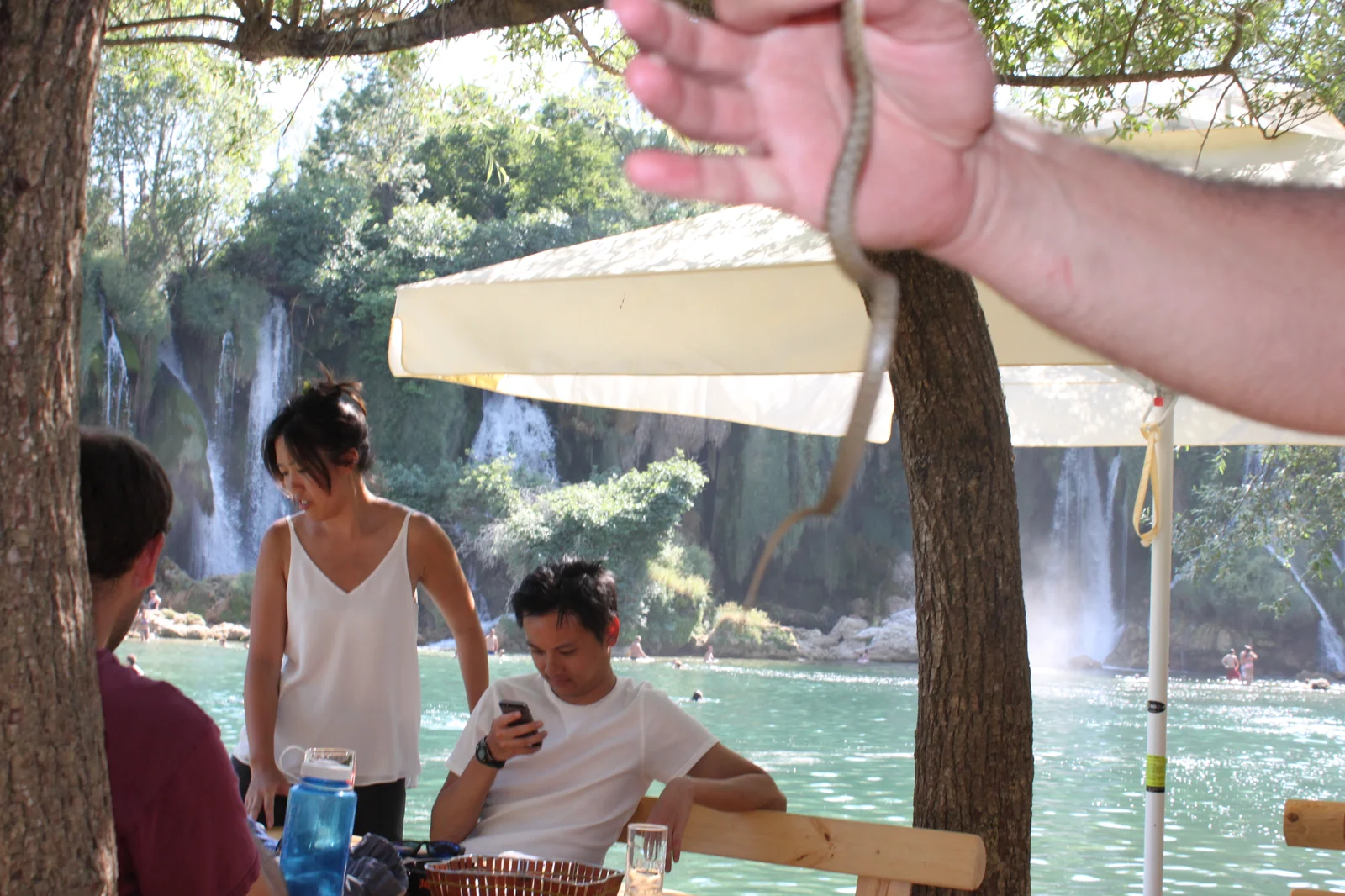
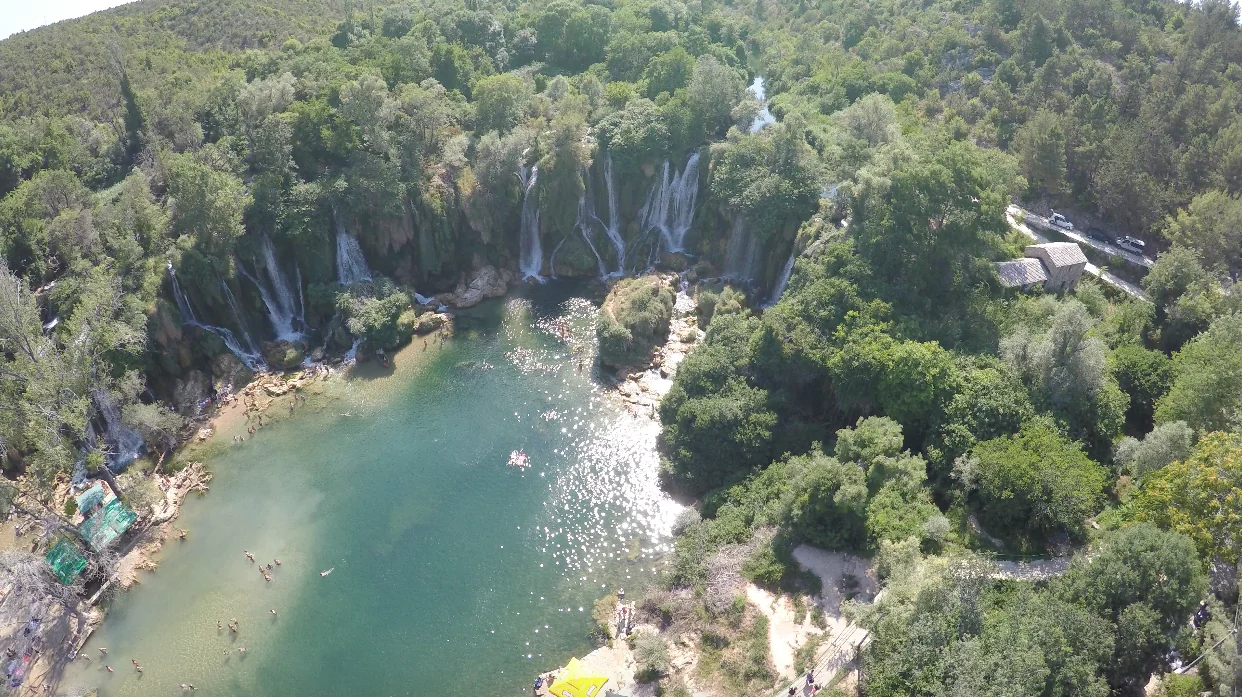
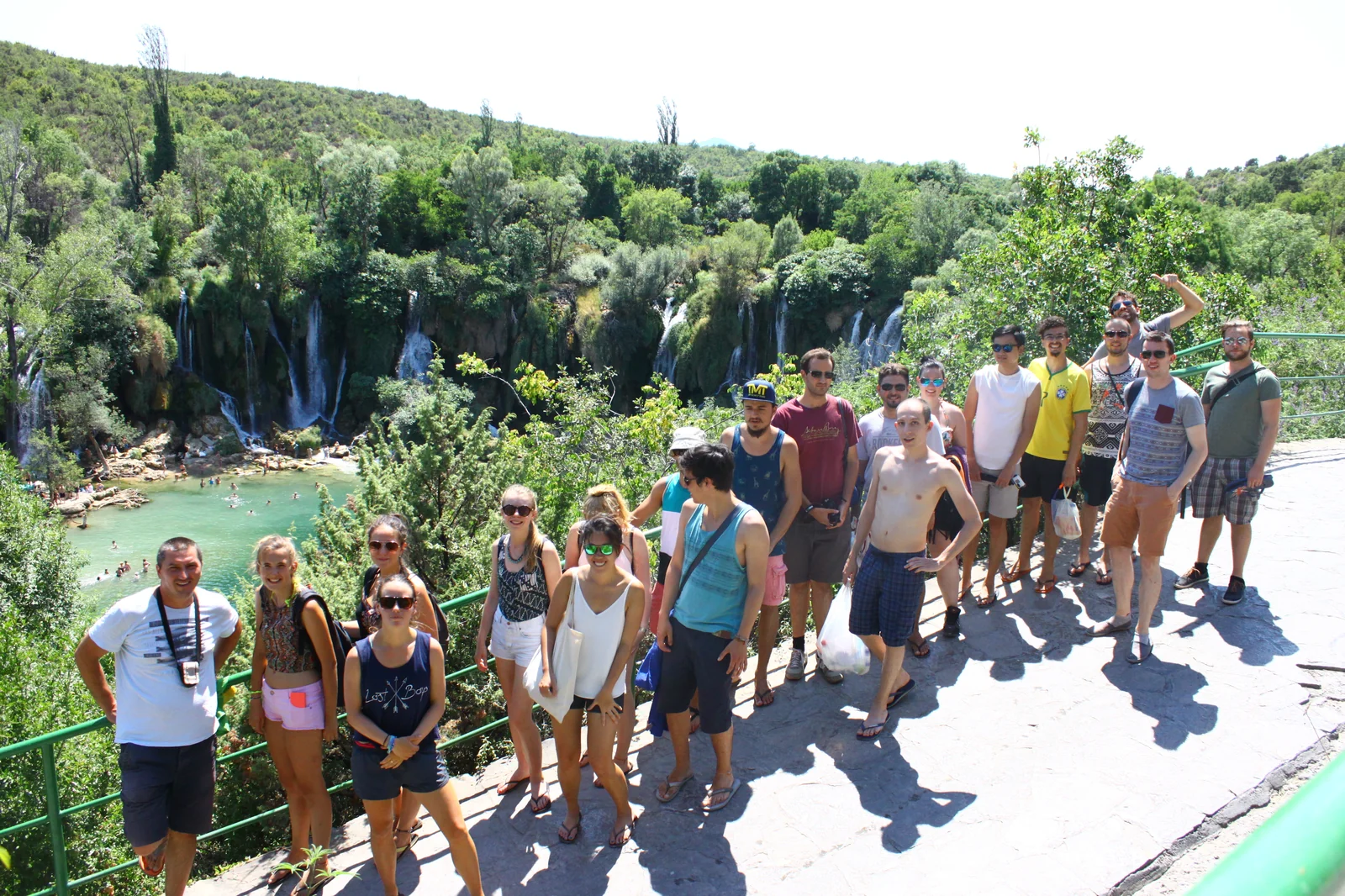
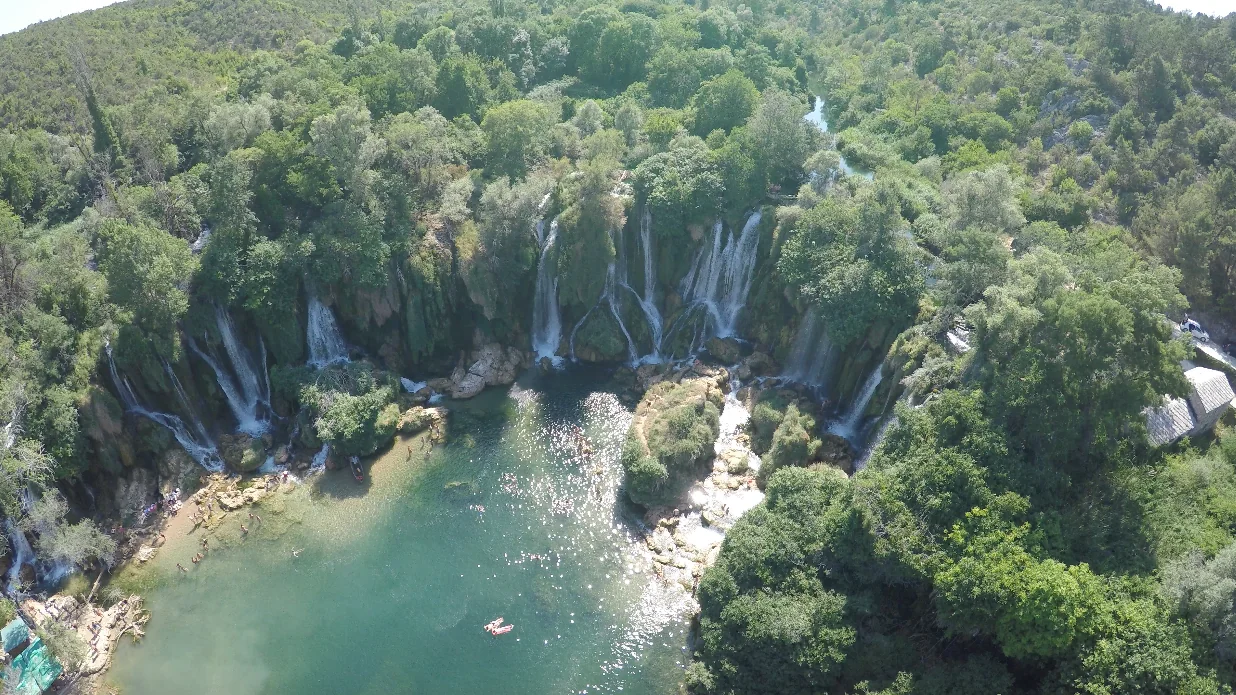
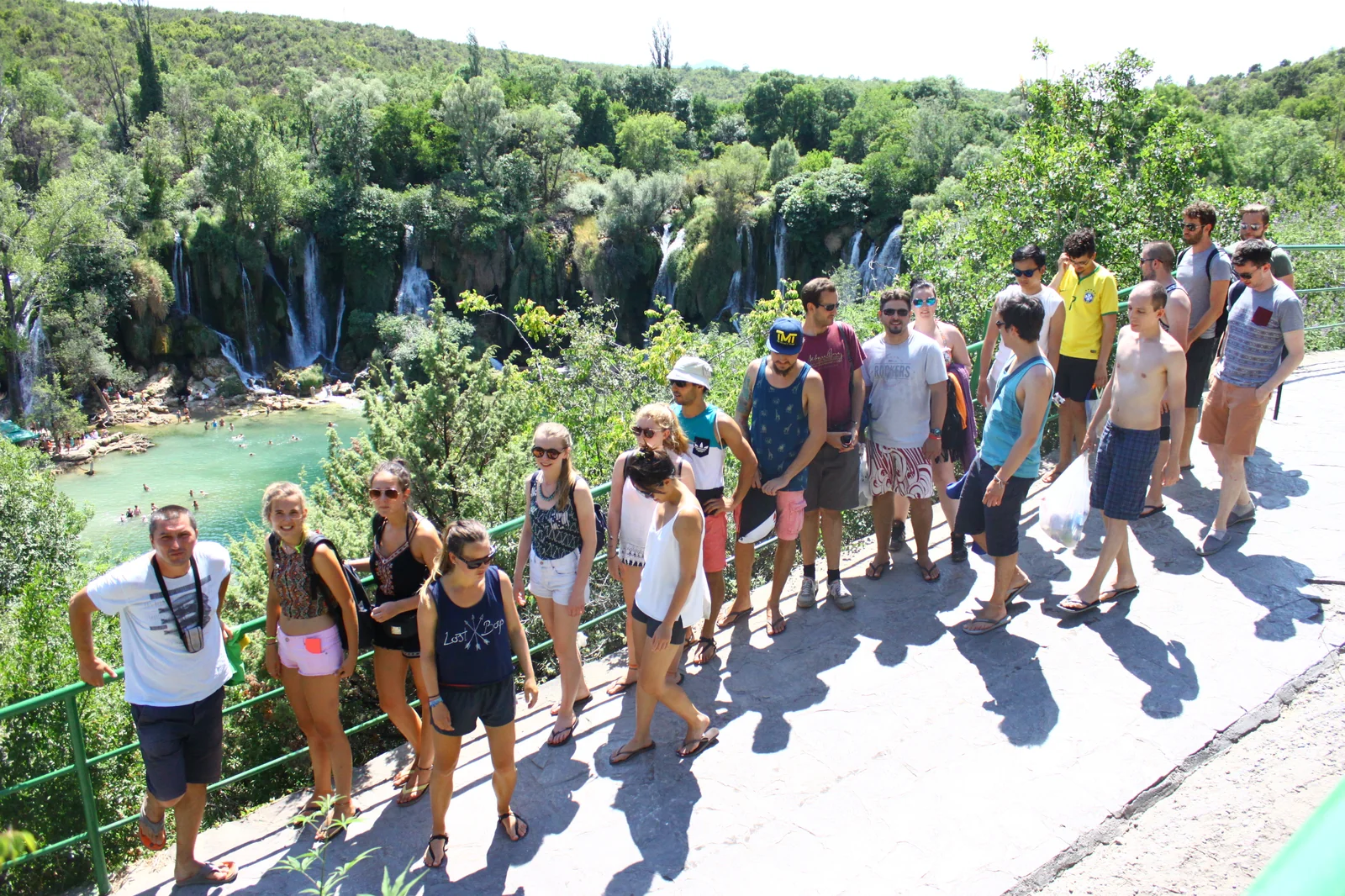
25 metres tall, 120 metres wide horseshoe cascade. The largest natural waterfall in Bosnia and Herzegovina by volume, and the only one that combines scale with genuine swimmability. The pool below the main cascade is deep, clean, and reaches 18–20°C in July–August — warm enough for extended swimming. Accessible on a paved road 40 km south of Mostar; entrance fee is 20 KM (€10) cash on site. Facilities include cafés, changing rooms, and kayak rental.
Why it's first: no other Bosnian waterfall lets you actually swim under it in a pool this size. Plitvice-level scenery at a fraction of the crowds.
When to go: May–October for swimming; year-round for viewing. See best time to visit Kravica for month-by-month detail.
2. Štrbački Buk (Una river, Bihać)
24 metres tall, thundering wide cascade on the Una river inside Una National Park, near the Croatian border. Dramatic limestone terraces, emerald water, and the most powerful sound-and-mist experience in the country. Swimming isn't done directly under it but rafting on the Una upstream is one of Bosnia's best adventure experiences.
Why it's second: raw scale matches Kravica but access is more difficult (four-hour drive from Sarajevo, far from the main tourist circuit) and you can't swim under it.
When to go: May–September (rafting season). Park entrance 5 KM.
3. Skakavac Waterfall (near Sarajevo)
At 98 metres, Skakavac is the tallest waterfall in Bosnia and Herzegovina — a single thin plume dropping from a cliff face 12 km north of Sarajevo. No pool, no swimming. Accessed by a 45-minute hike from the nearest road. Best in spring (April–May) when melt water gives it full flow; by August it's often reduced to a trickle.
Why it's third: tallest is not best. Skakavac is a serious viewing destination for hikers but not a half-day trip.
When to go: April–June. Pack proper shoes.
4. Pliva Waterfalls (Jajce)
22 metres, in the centre of the town of Jajce where the Pliva river meets the Vrbas. One of the most unusual waterfalls in Europe because it falls directly into the middle of a historic town — you can photograph it from a restaurant terrace. No swimming (fast current, dangerous boulders). Compact visitor experience.
Why it's fourth: unique urban setting, but the waterfall itself is smaller and less swim-friendly than Kravica.
When to go: year-round. Jajce itself is worth a half-day.
5. Kočuša Waterfall (Trebižat river, Ljubuški)
5 metres tall but 50 metres wide — a long, shallow, terraced cascade on the same Trebižat river that feeds Kravica, 10 km downstream. Very lightly visited (fewer than 50 tourists a day in peak season). Swimming is possible in the shallow pools. A secret-spot counterpoint to Kravica.
Why it's fifth: charming but small-scale. Best visited as a secondary stop on a Kravica-area day trip.
When to go: May–September. No entrance fee. See our Kočuša attraction page for details.
6. Provalija Waterfall (near Livno)
35 metres tall, hidden in a remote canyon in the Livno region. Rarely-visited, dramatic, and surrounded by pristine forest. Requires a 4x4 or a long hike to reach. Swimming in the pool below is possible for the experienced.
Why it's sixth: genuine hidden gem but the access requirement disqualifies it from most travellers' itineraries.
When to go: May–September only. Local guide recommended.
7. Mali Skakavac (near Sarajevo)
Smaller sibling of the famous Skakavac — about 30 metres tall, on the same hiking route. Viewable on the way up to Skakavac. Essentially a bonus stop for hikers already committed to the Skakavac trail.
Why it's seventh: not a standalone destination but worth including if you're doing Skakavac.
When to go: April–June.
8. Kravica (upper pools and side cascades)
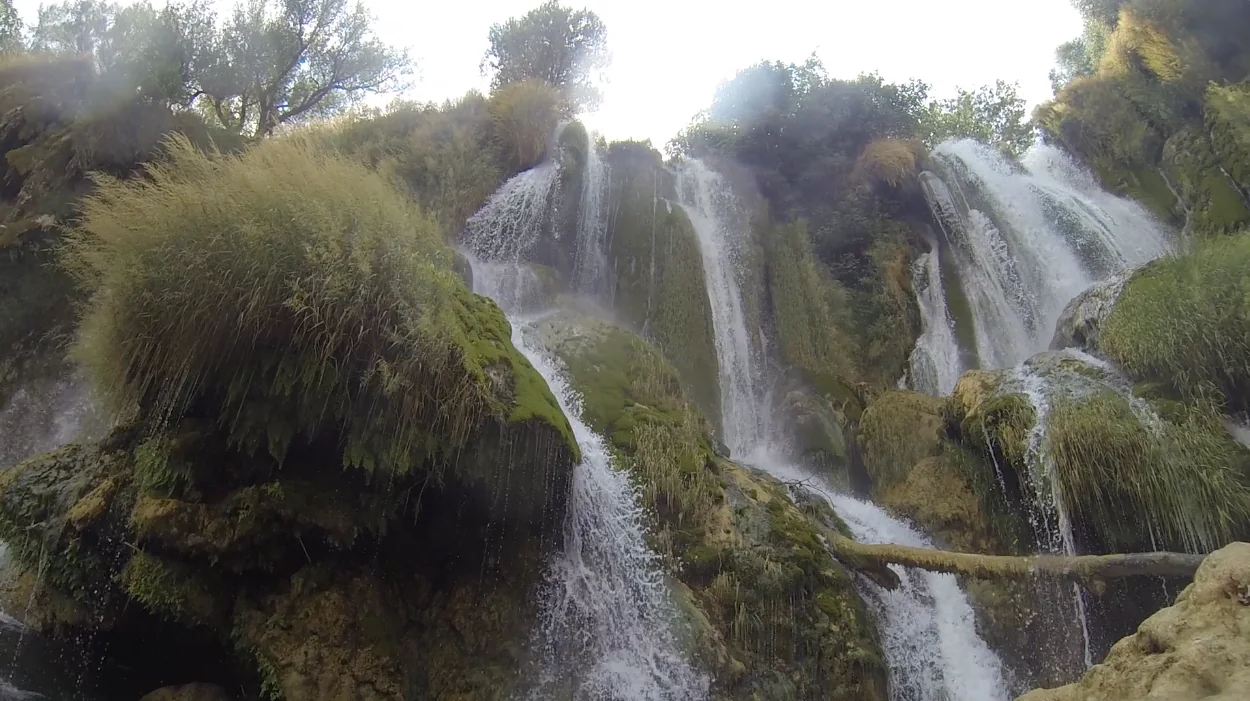
The Kravica site has smaller side cascades in addition to the main horseshoe — rarely photographed, usually empty of other swimmers, and technically part of the same park ticket. Worth 20 minutes of exploration beyond the obvious main pool.
What didn't make the list
Sopotnica (near Goražde), Vilina Vlas (Visegrad region), Tito's falls (Sutjeska National Park), and the many small cascades on the Neretva tributaries are genuinely beautiful but either too small, too remote, or too seasonal to recommend to travellers planning around them.
Bottom line for most travellers
If you have one day for a waterfall in Bosnia, go to Kravica. It's the only one that combines genuine scale, reliable swimmability, straightforward access, and a developed visitor experience. If you're doing a full Bosnia road trip with a week or more, add Štrbački Buk (combined with Una NP rafting) and Pliva (combined with Jajce town visit). Everything else is for specialists.
Regional context
Plitvice Lakes (Croatia, 1.5 hours north of the Bosnian border) is often lumped with Bosnian waterfalls but is a different product — we compare it to Kravica directly in Kravica vs Plitvice.
For Kravica tour options from each major departure city, see our tours listing.
Photos from this route